
5,000 Years of Tradition
The Artisans
The ancient art of Andean textile weaving, preserved by master craftspeople across generations
A living tradition
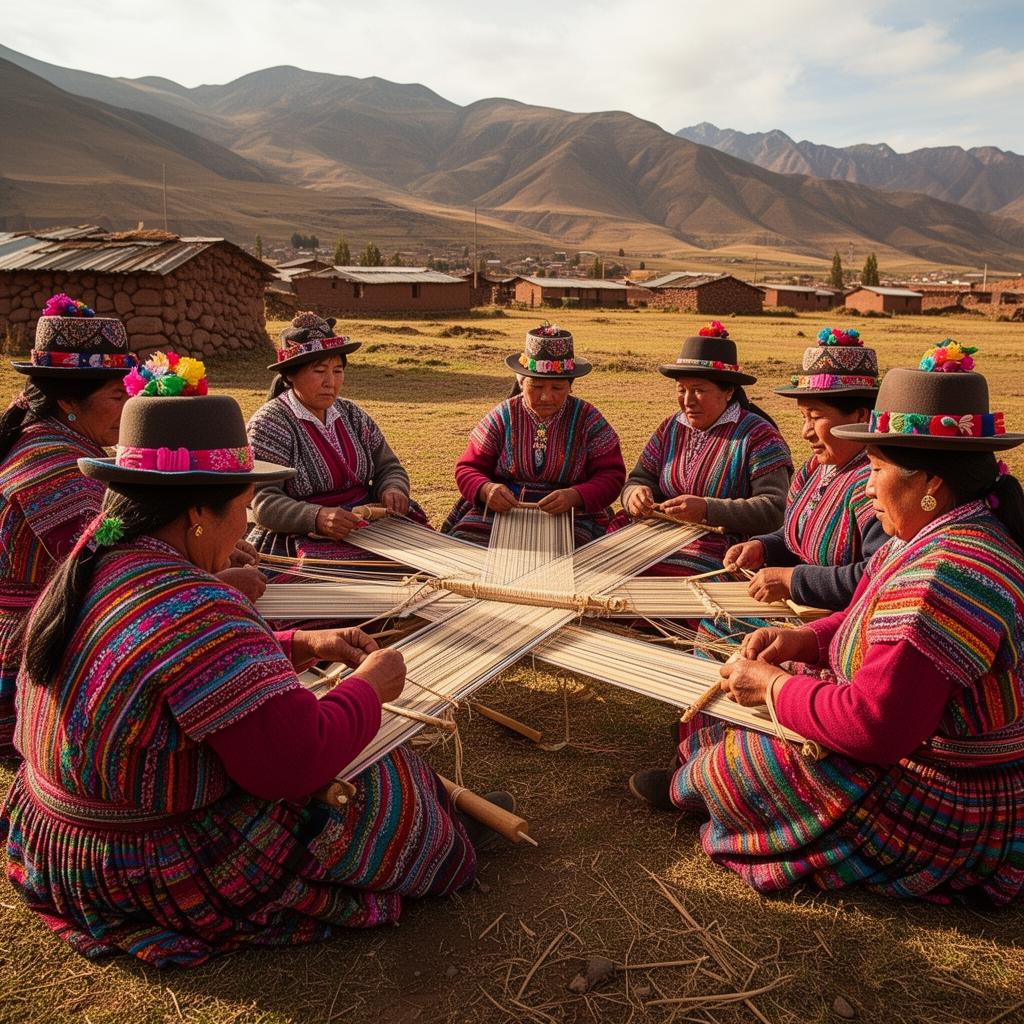
Long before the Inca Empire, the peoples of the Andes were already master weavers. Archaeological finds in Peru and Ecuador reveal textiles dating back over 5,000 years — some more intricate than anything produced by modern machines. Weaving was not just a craft; it was a language, a form of record-keeping, and a sacred act connecting the physical and spiritual worlds.
Today, this ancient tradition lives on in highland communities across Ecuador, Peru, and Bolivia, where artisans continue to weave using the same techniques their ancestors perfected millennia ago. Every Andes Loom blanket is a continuation of this extraordinary heritage.
The Ancient Process
From fleece to finished textile
Each blanket passes through the hands of multiple artisans, each a specialist in their part of the process. Here is how an Andes Loom blanket comes to life.
Harvesting the fleece
Each spring, alpacas are gently sheared by experienced handlers — a process that causes no harm and actually helps the animals stay cool in warmer months. A single alpaca produces enough fiber for several blankets.
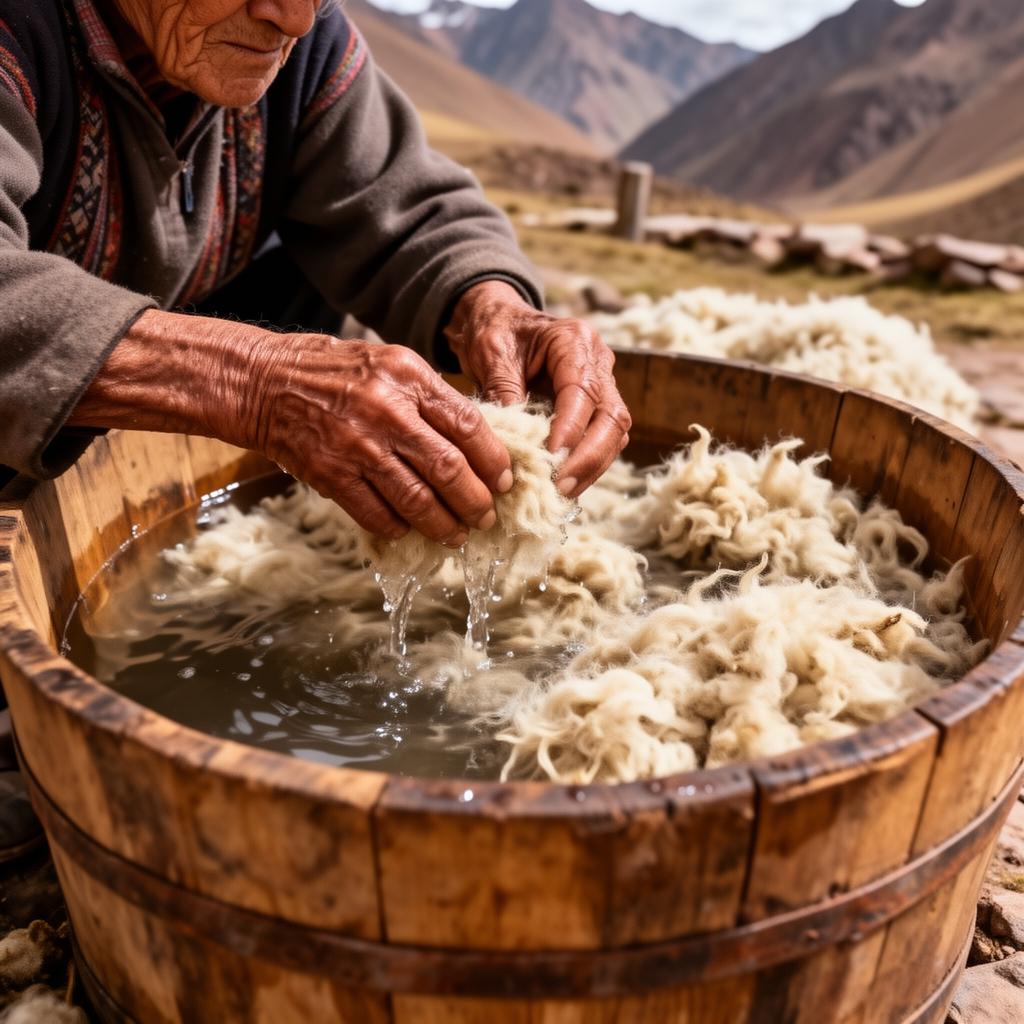
The raw fleece is then hand-washed in cold mountain stream water to remove dirt and natural oils. Unlike sheep's wool, alpaca fiber contains no lanolin, so only water is needed — no detergents or chemicals. The clean fleece is spread on rocks to dry under the Andean sun.
The pushka — an ancient tool
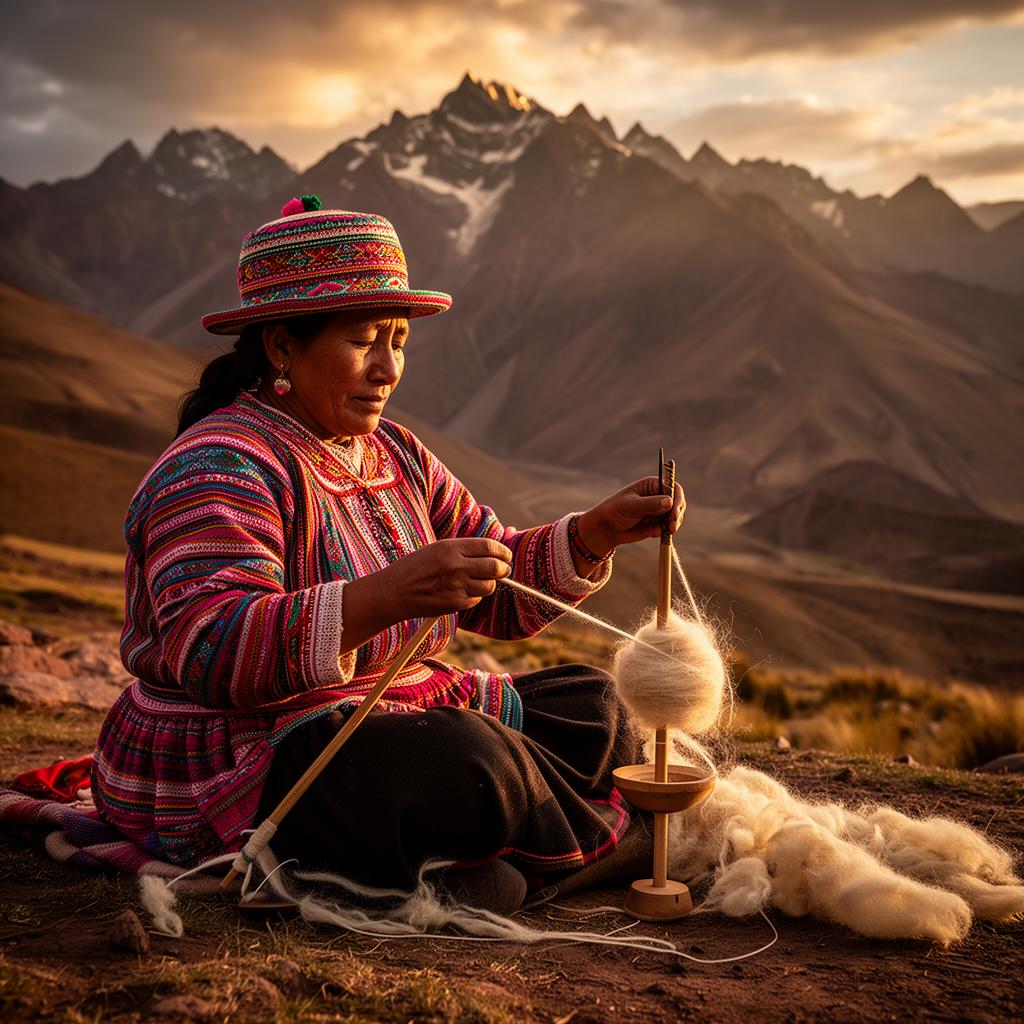
Using a pushka (drop spindle), artisans twist the clean fleece into yarn — a meditative, rhythmic process that has remained virtually unchanged for thousands of years. The pushka is so portable that Andean women are often seen spinning while walking to market, tending animals, or socializing.
The spinner controls the thickness and twist of the yarn, creating different weights for different purposes. Blanket yarn is spun thicker and tighter for durability, while scarf yarn is kept fine and soft. A skilled spinner can produce remarkably consistent yarn entirely by feel.
Colors from the earth
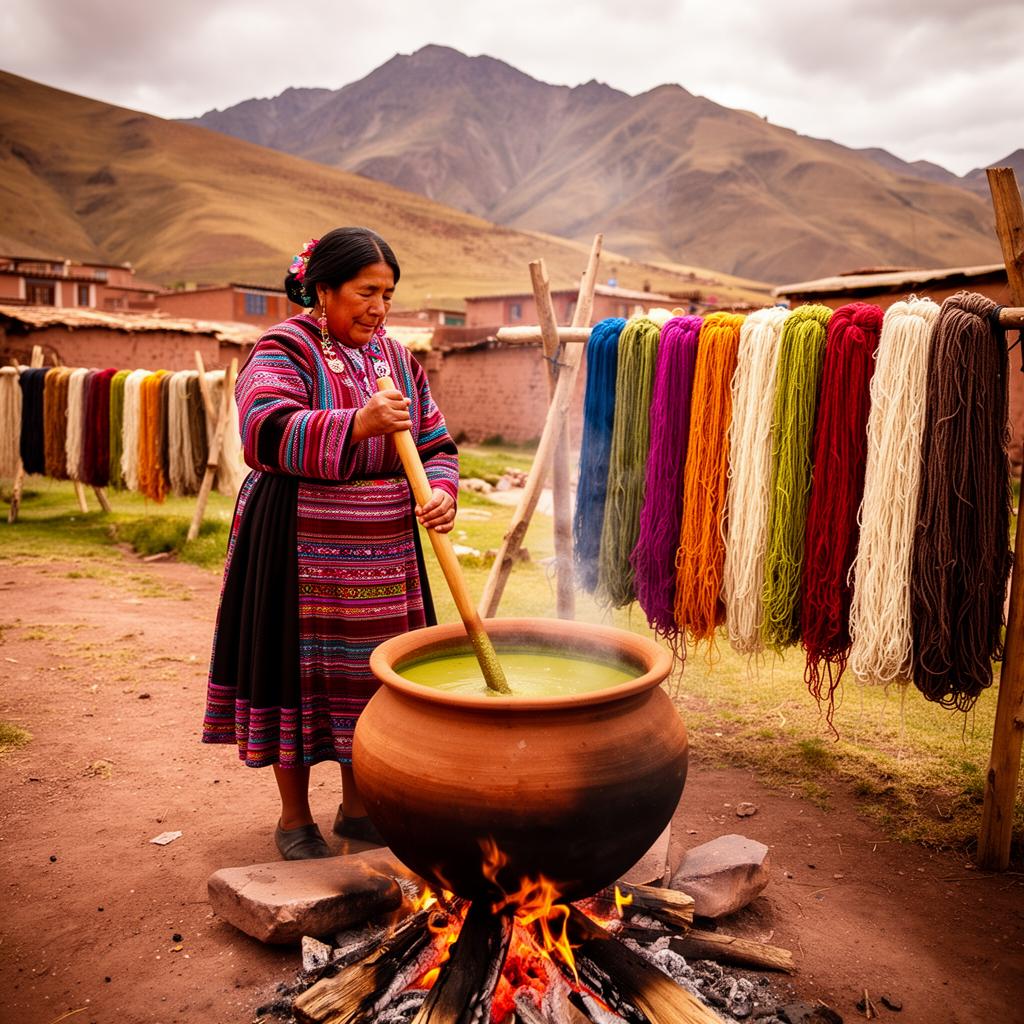
The Andean dyeing tradition draws from an extraordinary natural palette. Cochineal insects produce deep reds and magentas. Chilca leaves yield vivid greens. Molle bark creates warm yellows and golds. Indigo gives rich blues, and walnut husks produce deep browns.
Yarn is simmered in large clay pots over open fires, sometimes for hours, to achieve deep, permanent color. Mineral mordants like alum (found naturally in Andean soil) help fix the dyes so they won't fade with washing. The result is color that actually deepens and becomes richer with age.
The backstrap loom
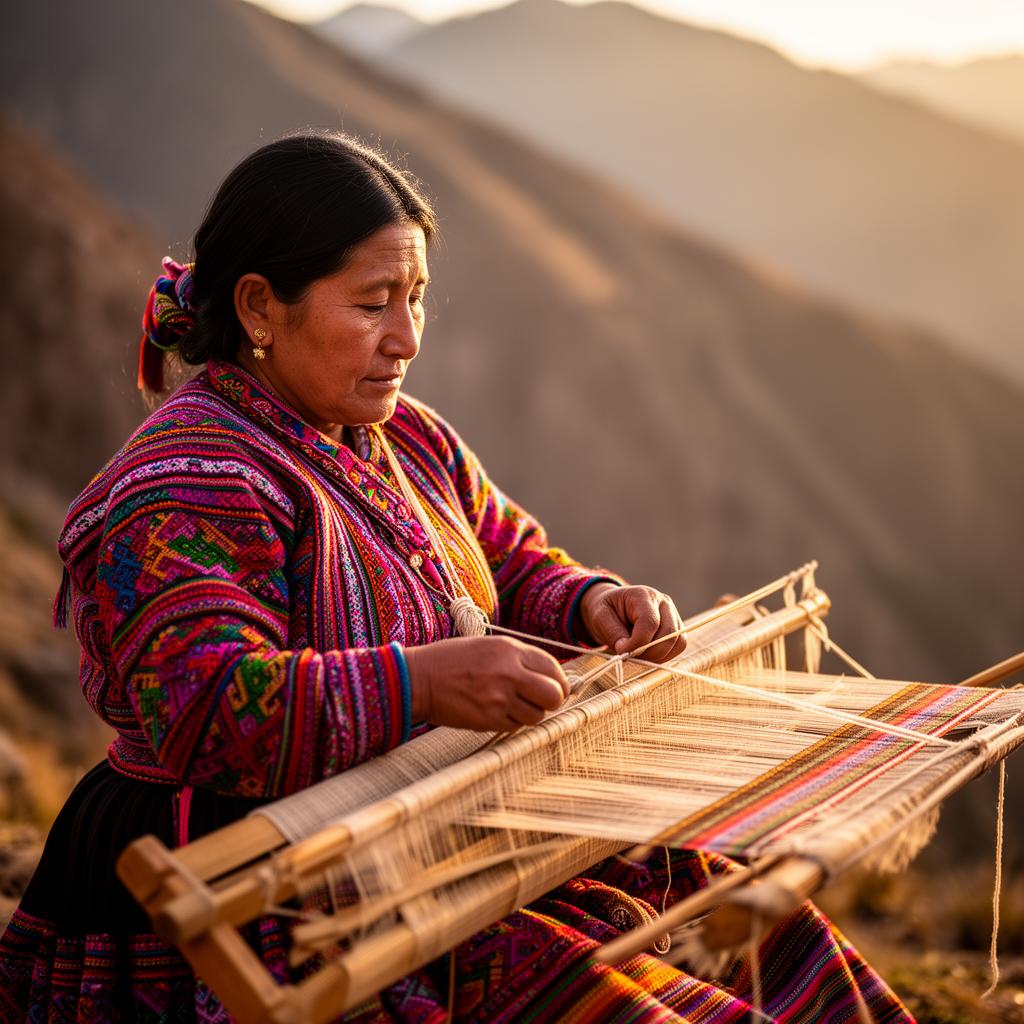
The backstrap loom is one of the oldest weaving technologies in the world. One end is tied to a post or tree, the other strapped around the weaver's body. By leaning forward or back, the weaver controls the tension of the warp threads — an intimate, full-body engagement with the craft.
A single blanket can take several days to complete. The weaver works row by row, carefully selecting colors and creating patterns from memory — no written instructions, no templates. Patterns are passed down orally from mother to daughter, each family maintaining their own signature designs.
The final touches
Once the weaving is complete, the blanket is carefully removed from the loom and the fringe ends are knotted by hand. The finished textile is then washed one final time and brushed to raise the soft alpaca nap, giving it that characteristic luxurious feel.
Every finished blanket is inspected for quality, ensuring that each piece that reaches your home meets the standards of both our artisan partners and Andes Loom. What arrives at your door is the product of weeks of skilled labor and centuries of accumulated knowledge.
Sacred Symbols
Every pattern tells a story
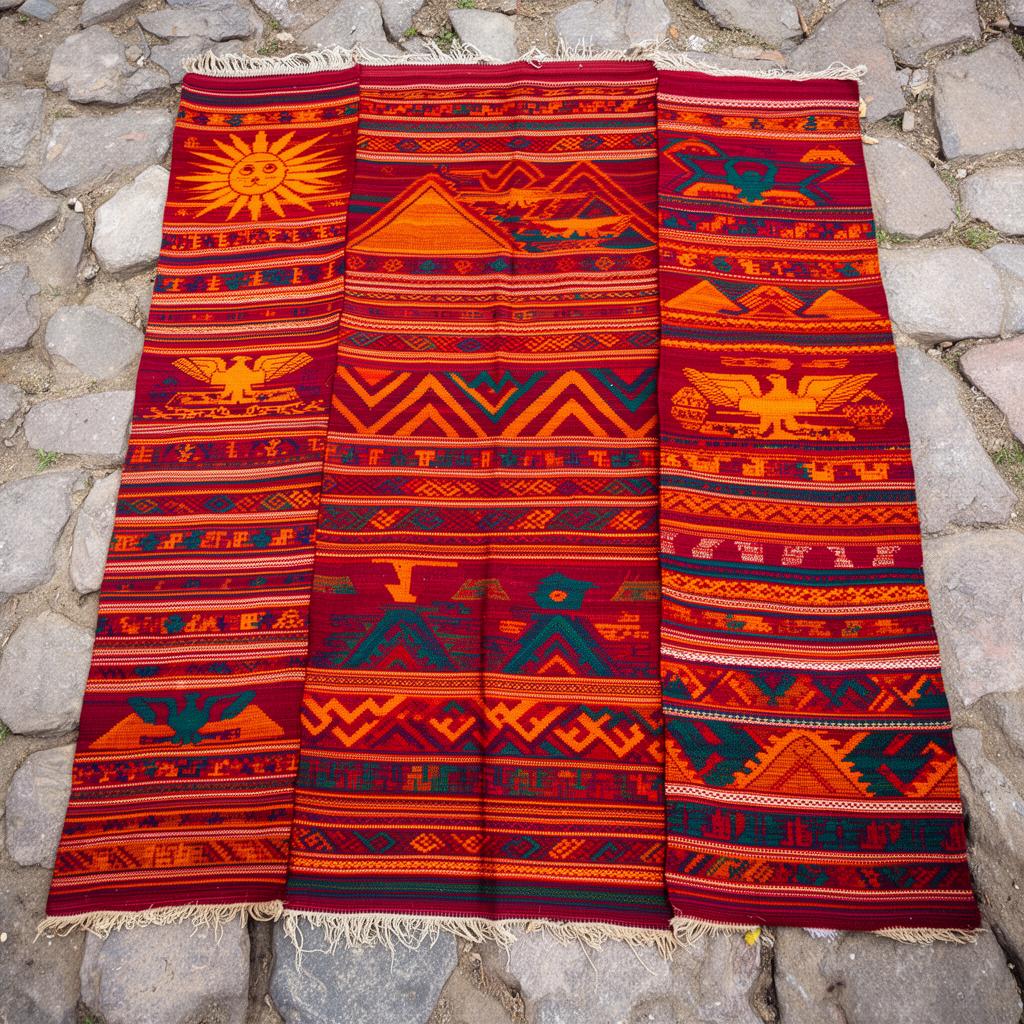
Andean textile patterns are far more than decoration — they are a visual language encoding cosmological beliefs, community identity, and agricultural knowledge. Before the Spanish conquest, textiles served as a primary form of communication and record-keeping, much like the famous quipu knotted cords.
Our Commitment
Supporting artisan communities
When you purchase an Andes Loom blanket, you're directly supporting the livelihoods of indigenous artisan families in the Ecuadorian highlands. We pay fair trade prices — significantly above market rate — and provide stable, year-round demand that allows artisans to sustain their craft as a full-time profession.
Beyond fair wages, we invest in community projects including weaving education programs for young people, ensuring these extraordinary skills are passed to the next generation. In a world of fast fashion and mass production, choosing handmade is an act of cultural preservation.